The Remote Manager's Blind Spots - What Distributed Teams Need That In-Person Teams Don't
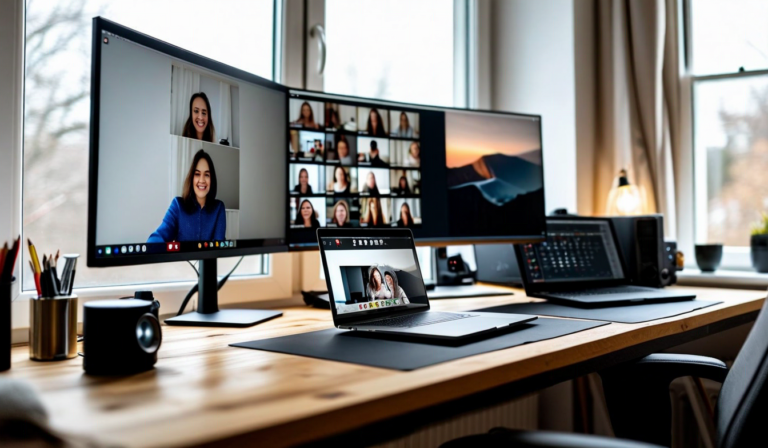
Managing a remote team is not the same job conducted over a different channel. The fundamental activities of management - giving feedback, building trust, detecting problems early, developing direct reports - all work differently when the signals that inform those activities are reduced or absent. A manager who was excellent in an office environment and received no additional training when their team went remote has a high probability of becoming a mediocre manager of a distributed team. The skills required are genuinely different.
The specific failure modes of remote management are not random. They cluster around three signal degradation problems: loss of ambient information about team mood and dynamic, loss of the informal relationship maintenance that happens in physical proximity, and loss of the real-time observational data that lets managers calibrate feedback timing.
The Ambient Information Problem
In an office, a manager picks up constant low-grade signals about their team without actively seeking them: the energy level in the room, who's eating lunch alone, who's staying late, two people who seem to be avoiding each other in the kitchen. This ambient information is processed unconsciously and informs the manager's sense of team health without requiring explicit data collection.
Remote managers have none of this ambient information. The signals they receive are the ones people explicitly produce: messages, meeting behavior, work output. Everything else is invisible. A direct report who is struggling personally, quietly falling behind on a project, or feeling isolated on the team will not necessarily produce any visible signal of these facts until they've become significant problems.
The management response to ambient information loss is not to demand more reporting - that creates surveillance anxiety that makes the problem worse. It's to build more structured check-in mechanisms that gather the information the environment used to provide passively. Weekly 1:1 questions that probe beyond work status. Monthly team health pulse surveys. Quarterly individual conversations specifically about team experience and wellbeing. These are active substitutes for passive ambient information - they require more deliberate effort but they gather comparable input.
Relationship Maintenance Without Physical Proximity
Research on trust formation in teams consistently finds that initial trust is built more quickly through physical co-presence. The shared experiences of in-person work - the ad hoc conversations, the lunches, the incidental observations of each other as humans rather than professional avatars - accelerate the trust development that makes working relationships function.
Remote teams can build equally strong trust over time, but they require more deliberate investment in the early stages. Microsoft Research's studies on remote work showed that fully remote employees who had never met their manager in person rated their relationship quality an average of 11 points lower than hybrid employees who had at least quarterly in-person touchpoints, controlling for tenure and manager behavior quality.
The practical implication: remote managers should invest disproportionately in relationship-building in the first 90 days with a new direct report or at the start of a new team configuration. This means more frequent 1:1s early, more non-work conversation built intentionally into those 1:1s (not forced or scripted, but genuinely allowed to happen), and explicit conversation about working preferences, communication styles, and what a good working relationship looks like from each person's perspective.
The Written Communication Load
Remote teams depend heavily on written communication, which is a different medium than verbal communication in ways that matter for management. Written feedback is processed more analytically and less relationally than verbal feedback. A written comment that reads as a mild correction to the manager may read as a pointed criticism to the direct report because the relational warmth that would accompany the same comment in person is absent from the text.
Remote managers need to calibrate their written communication differently than their verbal communication. This means being more explicit about tone ("I want to flag this early - not because it's a crisis, but because I want to help you avoid a problem..."), more generous with positive signals (because ambient positive signals are invisible in remote settings), and more careful about delivering significant feedback in written form rather than saving it for a synchronous conversation.
A specific rule we give remote managers in our coaching programs: anything that requires nuance or that has emotional weight should happen synchronously, not asynchronously. A performance correction, a recognition of exceptional work, a career conversation - these belong in a video call, not a Slack message. The bandwidth of the communication channel should match the complexity of the content.
Visibility and the Proximity Bias Problem
Proximity bias is one of the most consistent findings in hybrid team management research: in-person employees receive higher performance ratings, more stretch assignments, and more informal mentorship than their equally-performing remote counterparts. The mechanism is simple - the manager sees the in-person employee doing the work, engaging with colleagues, demonstrating engagement. The remote employee is invisible except in their outputs.
Remote managers of fully distributed teams are not immune to proximity bias - they have it toward their most communicative and visible team members. The person who messages most in Slack, who speaks most in video meetings, who sends the most proactive status updates becomes more cognitively present to the manager than the person who works quietly and effectively but generates less visible activity.
The fix is process-based. Performance evaluation should be explicitly anchored to work outputs and stated criteria, not impressions. Stretch assignment distribution should be tracked and audited to ensure it's not skewing toward the most visible team members. 1:1s should be prioritized for the quieter team members who are less likely to maintain the relationship through proactive communication.
Team Culture Without a Physical Location
Team culture in an office environment is shaped by physical rituals - where people sit, the informal norms of the workspace, the ceremonies of shared meals and off-site events. Remote teams can build genuine culture but it requires the manager to invest in cultural artifacts and rituals that are intentionally designed rather than accidentally emergent.
What this looks like in practice: team working agreements documented and referenced (not just created once and forgotten), explicit conversation about team values and norms during onboarding of new members, regular async communication about team wins and learning, and periodic synchronous events that have no work agenda - purely social or celebratory. The time investment in these activities is often viewed as overhead by managers who are managing to output. It's not overhead. It's the infrastructure that makes distributed teams function sustainably.
Building Remote Management Skills Deliberately
The managers we see struggle most with remote management are those who had strong informal mentorship in in-person environments and who learned by observation over time. That informal learning pathway doesn't work remotely - there's nothing to observe in the same way. Remote management skill development requires the same deliberate investment that other management skills require: structured feedback, peer learning, explicit practice on specific techniques.
In our cohort programs, we've added a dedicated remote management module that covers the specific skill gaps described in this piece: structured ambient information gathering, written communication calibration, proximity bias mitigation, and distributed team culture building. The managers who get the most from this module are invariably those who thought they were already good remote managers and discovered specific gaps they hadn't been aware of.
For the core 1:1 practices that become even more critical in remote settings, read our piece on how great 1:1s work. In remote environments, the 1:1 is the primary relationship maintenance mechanism - getting it right is not optional.
Managing a distributed team? Our cohort programs include remote management as a dedicated module. Coaches are experienced with fully remote and hybrid team contexts. Explore cohort programs →